Why do many men think that building big muscles will gain them more respect?
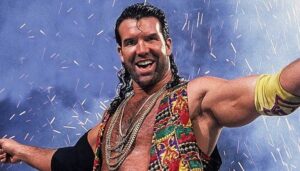 Because it does. Respect and female admiration.
Many men pursue big muscles because physical strength has long served as a reliable signal of formidability—the ability to protect, provide, compete, and deter threats—which historically translated into higher social status, respect from peers, and advantages in mating and survival. This isn’t just modern gym culture; it’s rooted in deep evolutionary and psychological patterns, amplified by contemporary social dynamics.
Evolutionary roots: Strength as a cue of dominance and resource-holding power
In ancestral environments, upper-body strength (particularly in the shoulders, chest, arms, and grip) was a major advantage in male-male competition, hunting, tool use, and defense. Stronger men were better at winning physical contests, acquiring resources, and protecting kin, which boosted their reproductive success. Studies show that cues of physical strength explain a large portion (around 70%) of variance in how attractive men’s bodies are rated, with strength perceived as a linear positive trait—stronger generally equals more formidable and desirable.
Humans (both men and women) are remarkably accurate at visually assessing strength and fighting ability from bodies and even faces. Muscularity signals “resource-holding potential”: the capacity to impose costs on others or hold onto gains. This leads to perceptions of dominance, which in turn elicits deference or respect. Meta-analyses link greater male strength and muscularity to more mating success and offspring, consistent with sexual selection via male-male competition (where formidable men outcompete rivals for status and partners) rather than purely female choice.
In short: bigger muscles were (and subconsciously still are) read as “this guy can handle threats and challenges,” earning him a higher position in the social hierarchy. Weaker or less imposing men were more likely to be challenged or overlooked.
Psychological and social mechanisms: Respect as deference to capability
People instinctively treat stronger-looking men with greater respect because the body broadcasts competence, discipline, and resilience. A muscular physique demonstrates the ability to overcome resistance (literally lifting heavy weights over time), which proxies for mental toughness, work ethic, and self-control—traits valued in allies, leaders, or protectors.
- Intrasexual competition: Among men, muscles can deter aggression or intimidation attempts. Stronger men are often seen as higher in dominance hierarchies, leading to more social leeway, better opportunities, or simply being taken more seriously.
- Self-esteem boost: Lifting builds real agency and progress you can measure (more weight, better definition). This translates to higher self-respect, which radiates outward as confidence—often interpreted by others as deserving of respect.
- Signaling to women and peers: While women don’t universally demand extreme bodybuilder size, they (and men) rate muscular builds higher for short-term appeal or formidability. Media and culture reinforce this by portraying muscular men as heroic, successful, or prestigious.
Modern men often report pursuing muscle for respect, better first impressions, job advantages, or to avoid being seen as weak/young/immature. It’s a visible “badge” of masculinity in cultures where traditional roles (physical labor, protection) have diminished but the instincts remain.
Cultural amplification and individual variation
Today’s gym culture, action movies, sports, and social media glorify the lean, V-shaped muscular ideal as a status symbol. Internalizing these ideals drives many men toward muscularity, especially younger ones or those feeling low status. Peer pressure and masculine norms (toughness, stoicism, dominance) play a role, as does the simple fact that effort in the gym is observable and respectable—people admire discipline more than genetics alone.
Not all men chase extreme size; preferences vary by culture (some non-Western groups value functional strength or larger bodies differently) and personal goals. Drive for muscularity also correlates with traits like social dominance orientation—men who value hierarchies may lift more. Age matters too: younger men often prioritize it more intensely.
Importantly, this belief isn’t delusional. Evidence from perception studies, self-reports, and real-world outcomes (e.g., stronger men rated higher in dominance, sometimes gaining social or mating edges) shows that muscularity does often command more respect, at least initially or in certain contexts. However, it’s not the only path—character, skills, wit, and reliability earn deeper, lasting respect. Extreme pursuit can tip into insecurity (muscle dysmorphia) or overcompensation if it’s purely armor for inner fragility.
Ultimately, many men think big muscles buy respect because, across human history and psychology, they reliably signaled the qualities societies (and our brains) reward: capability, protection, and the will to improve oneself. The instinct persists even in safer, modern worlds where brute force matters less than before. Whether it’s the optimal strategy depends on the individual, but the underlying logic—strength as a honest signal—is ancient and effective.
You can get anabolic steroids for muscle growth at www.RasputinShop.com