Benefits of Retatrutide: What the Clinical Evidence Shows
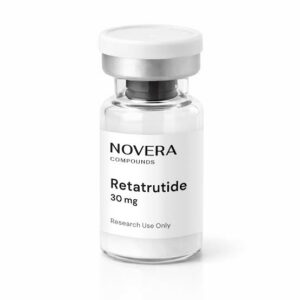
Retatrutide has emerged as one of the most closely watched investigational medicines in obesity research. Unlike conventional treatments that target a single metabolic pathway, retatrutide is designed to activate three hormone receptors—GLP-1, GIP, and glucagon. This multi-receptor mechanism has generated significant interest because clinical trials have reported substantial reductions in body weight, along with improvements in several obesity-related health measures.
However, an important distinction should be made from the outset: retatrutide is still an investigational medicine and has not been approved by the FDA or any other regulatory agency for routine clinical use. It is currently being evaluated in clinical trials.
1. Significant Weight-Loss Potential
The most notable potential benefit of retatrutide is its effect on body weight.
In a randomized Phase 2 clinical trial published in the New England Journal of Medicine, adults receiving 12 mg of retatrutide experienced a mean weight reduction of 24.2% after 48 weeks. The reduction was substantially greater than the 2.1% reduction observed with placebo. Researchers also found that weight loss increased with higher doses.
The findings became even more compelling with later Phase 3 research. In the TRIUMPH-1 trial, participants receiving 12 mg of retatrutide achieved an average weight reduction of 28.3% after 80 weeks, according to topline results reported by Eli Lilly. At the 4 mg dose, the average reduction was 19.0%.
These results suggest that retatrutide could become an important option in future obesity treatment if ongoing research confirms its efficacy and safety.
2. A Triple-Action Metabolic Mechanism
Retatrutide’s defining feature is its triple-agonist mechanism.
GLP-1 and GIP are incretin hormones involved in appetite regulation and metabolic signaling. Glucagon plays an important role in energy metabolism. By targeting all three pathways simultaneously, retatrutide is being investigated as a way to influence several biological processes involved in body-weight regulation.
This approach is different from medicines that primarily target GLP-1 alone. The scientific rationale is that combining these pathways could create complementary effects on food intake, energy balance and metabolic function.
The Phase 2 research supports the potential of this strategy: participants continued to lose weight throughout the 48-week treatment period, and researchers reported that the weight-loss trajectory had not clearly reached a plateau at the end of the study.
3. Potential for Substantial Reductions in BMI
A major benefit of significant weight loss is that it can translate into meaningful changes in body-mass index, or BMI.
In the TRIUMPH-1 Phase 3 trial, Lilly reported that 65.3% of participants receiving 12 mg of retatrutide achieved a BMI below 30 by week 80, meaning they no longer met the BMI criterion for obesity.
This is particularly relevant because obesity is associated with numerous health complications. Reducing excess body weight can potentially improve several risk factors simultaneously, although the degree of benefit for any individual depends on their overall health and clinical circumstances.
4. Potential Improvements in Glycemic Control
Retatrutide may offer benefits beyond weight reduction.
Clinical research has also investigated its effects on blood-glucose markers. In the Phase 3 TRANSCEND-T2D-1 study, Lilly reported reductions in HbA1c of up to 2.0% and weight loss of up to 16.8% at 40 weeks among participants with type 2 diabetes. Up to 46% of participants achieved a normal HbA1c level in the reported results.
These findings are particularly interesting because obesity and abnormal glucose regulation frequently occur together. A treatment capable of influencing both body weight and glycemic measures could potentially have broader metabolic implications.
Nevertheless, these are clinical-trial findings rather than evidence that retatrutide is currently an approved treatment for diabetes.
5. Potential Benefits for Obesity-Related Conditions
One of the most important areas of current research is whether substantial weight reduction with retatrutide can improve complications associated with obesity.
In 2026, Lilly reported results indicating improvements in several obesity-related conditions. In TRIUMPH-1, retatrutide was associated with reductions in knee osteoarthritis pain of up to 73.1%. Separate Phase 3 findings also reported reductions in the severity of moderate-to-severe obstructive sleep apnea.
These findings broaden the potential significance of retatrutide. Instead of viewing weight loss simply as a change on the scale, researchers are investigating whether substantial reductions in body weight can translate into improvements in conditions that commonly accompany obesity.
Further independent publication and peer-reviewed analysis will be important for understanding the full clinical significance of these results.
6. Large Proportions of Participants Achieved Meaningful Weight Loss
Another notable feature of the clinical evidence is the proportion of participants reaching clinically meaningful weight-loss thresholds.
In the Phase 2 trial, 93% of participants receiving 12 mg achieved at least 10% weight loss after 48 weeks, while 83% achieved at least 15%. The corresponding figures for placebo were 9% and 2%.
The same study found that 26% of participants in the 12 mg group achieved at least 30% weight loss.
These results suggest that the potential benefit is not limited to a small number of exceptional responders. A substantial proportion of participants achieved weight reductions that would generally be considered clinically meaningful.
7. Evidence of Continued Weight Reduction Over Time
The duration of weight loss is another potentially important advantage.
Many weight-management studies show that weight changes evolve gradually rather than occurring immediately. Retatrutide has demonstrated this pattern in clinical research.
In the Phase 2 study, participants continued to lose weight throughout the 48-week treatment period, with researchers noting that the trajectory had not clearly reached a plateau.
The Phase 3 TRIUMPH-1 program extended the available observation period. At 80 weeks, the 12 mg group achieved an average reduction of 28.3%. In an extension involving participants with higher baseline BMI, Lilly reported an average weight reduction of approximately 30.3% at 104 weeks among participants continuing on 12 mg.
Longer-term data will be particularly important for determining how durable these effects are.
8. A Potential Next Generation of Obesity Treatment
Perhaps the broader benefit of retatrutide is what it represents scientifically.
The development of retatrutide reflects a shift toward therapies that target multiple biological pathways simultaneously. Rather than relying on one metabolic signal, researchers are testing whether combining complementary hormonal mechanisms can produce greater and more sustained effects.
This could eventually expand the range of treatment strategies available for people living with obesity. However, whether retatrutide ultimately offers a meaningful advantage over currently approved medicines will require appropriate randomized comparisons and longer-term safety data.
Safety and Regulatory Status Matter
The impressive weight-loss results should not obscure the fact that retatrutide remains investigational.
In the Phase 2 trial, the most common adverse events were gastrointestinal, including effects that were generally mild to moderate and related to dose. Researchers also observed dose-dependent increases in heart rate, which peaked around week 24 and subsequently declined.
Because retatrutide has not been approved by regulatory authorities, there is currently no approved routine-use dose. Lilly states that retatrutide is legally available only through its clinical trials and warns that products sold outside those trials cannot have their safety, purity or dosing verified.
This is especially relevant as unauthorized products marketed as retatrutide are increasingly appearing online. Recent reporting indicates that Lilly has taken legal action against companies accused of selling unapproved versions of the investigational drug.
The Bottom Line
Retatrutide’s potential benefits are compelling. Clinical research has demonstrated substantial average weight loss, a multi-receptor mechanism, improvements in glycemic measures, and potential benefits for obesity-related conditions such as knee osteoarthritis pain and obstructive sleep apnea.
The headline weight-loss numbers are particularly striking: Phase 2 research reported up to 24.2% average weight reduction at 48 weeks, while Phase 3 TRIUMPH-1 results reported up to 28.3% at 80 weeks.
Yet these results should be viewed in the proper context. Retatrutide is still being investigated, and its ultimate role in obesity treatment depends on the completion of clinical development, regulatory review, and longer-term evidence concerning safety and effectiveness.
For now, retatrutide represents a promising next-generation approach to obesity research—not an approved medicine for self-directed use. Its combination of GLP-1, GIP and glucagon activity makes it scientifically distinctive, while the magnitude of weight reduction observed in trials explains why it has become one of the most closely followed candidates in the future of metabolic medicine.